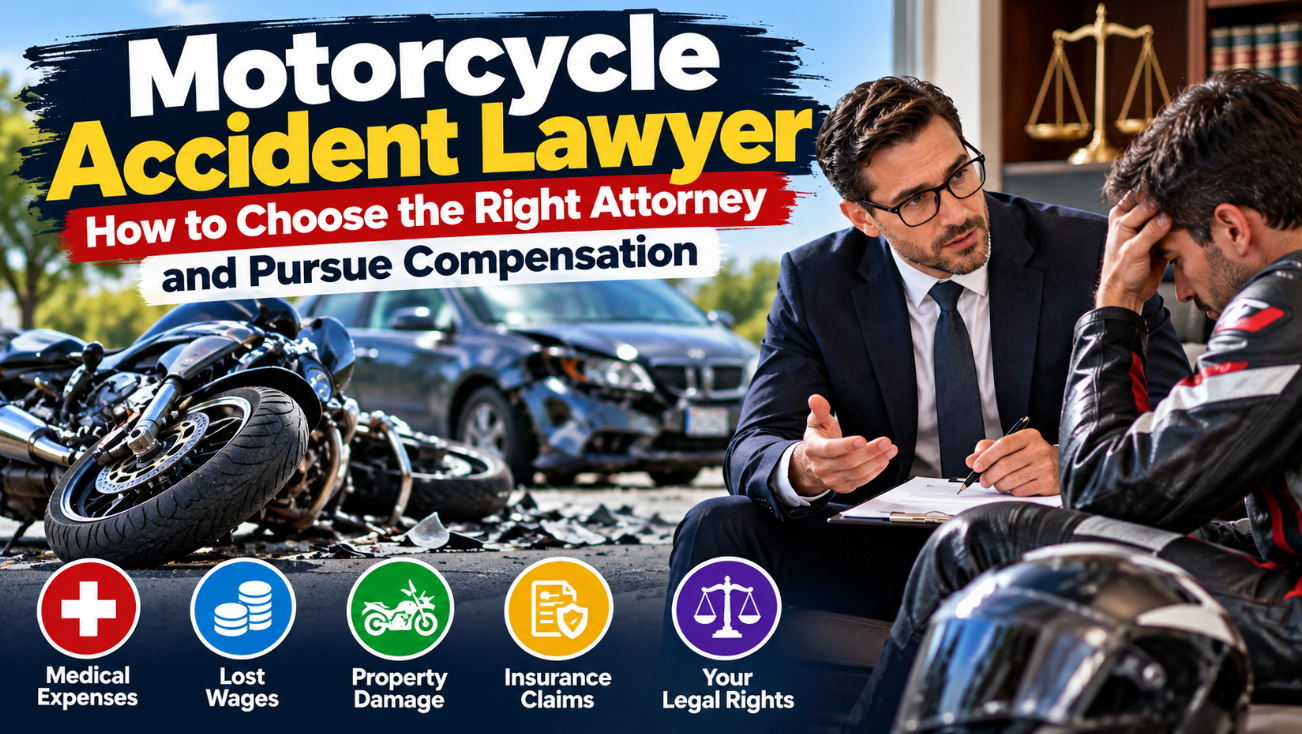
A motorcycle accident can change your life in an instant. Even a collision that initially appears minor can result in serious injuries, expensive medical treatment, lost income, and unexpected financial difficulties. If another driver caused the accident, you may be wondering whether you need a motorcycle accident lawyer and how you can pursue compensation for your losses.
Motorcycle accident claims can be complicated because insurance companies may dispute who was responsible, question the severity of an injury, or challenge the amount of compensation requested. Understanding your legal options can help you make informed decisions during the recovery process.
In this guide, you will learn what a motorcycle accident attorney does, how to choose the right lawyer, how legal fees typically work, what compensation may be available, and what steps to take after a motorcycle crash in the United States.
What Does a Motorcycle Accident Lawyer Do?
A motorcycle accident lawyer is a personal injury attorney who represents people injured in motorcycle collisions. Depending on the circumstances, the attorney may help investigate the accident, communicate with insurance companies, calculate damages, negotiate a settlement, or file a lawsuit.
Motorcycle accident cases may involve disputed liability, serious injuries, multiple vehicles, road hazards, or disagreements about insurance coverage.
An attorney may provide assistance with several aspects of a claim.
Investigating the Accident
Understanding how a collision occurred is an important part of establishing responsibility.
An attorney may review the police report, photographs, witness statements, medical records, traffic camera footage, and other available evidence. In complex cases, accident reconstruction specialists may be consulted to analyze the collision.
The evidence can help determine whether a driver, another party, or multiple parties may have contributed to the accident.
Gathering Medical Evidence
Medical documentation can help establish the nature and extent of your injuries.
Your attorney may help organize treatment records, medical bills, physician reports, and information about ongoing rehabilitation. If your injuries affect your ability to work, employment records and other financial documentation may also be relevant.
Communicating With Insurance Companies
Insurance adjusters investigate claims and evaluate the available evidence. Your lawyer may communicate with insurers, respond to requests for documentation, and negotiate on your behalf.
An attorney can also explain the potential consequences of accepting a settlement or signing a release.
Negotiating a Settlement or Filing a Lawsuit
Many personal injury claims are resolved through settlement negotiations. However, if the parties cannot agree on liability or compensation, filing a lawsuit may be an option.
A lawyer can explain the available legal procedures and help you understand the potential benefits, costs, and risks of pursuing litigation.
When Should You Hire a Motorcycle Accident Lawyer?
Not every motorcycle accident requires an attorney. A minor collision involving limited property damage and no injuries may be handled through an insurance claim.
However, legal representation may be worth considering if:
- You suffered serious injuries or require ongoing medical treatment.
- The other driver disputes responsibility for the collision.
- The insurance company denies your claim.
- The settlement offer does not adequately address your documented losses.
- You have missed work or experienced a loss of earning capacity.
- Multiple drivers or other parties may be responsible.
- You are dealing with an uninsured or underinsured driver.
- You are uncertain about a legal deadline or settlement agreement.
You do not necessarily need to wait until your injuries become severe to seek legal advice. If you are unsure about your rights, a consultation may help you understand your options.
What Compensation Can You Recover After a Motorcycle Accident?
The compensation available after a motorcycle accident depends on the circumstances of the collision, the evidence, applicable state law, and the insurance coverage involved.
If another party is legally responsible for your injuries, you may be able to pursue compensation for certain losses.
1. Medical Expenses
Medical costs may represent a significant portion of a motorcycle accident claim.
Depending on the circumstances, recoverable expenses may include:
- Emergency room treatment.
- Hospital stays and surgery.
- Diagnostic tests and medical imaging.
- Prescription medication.
- Physical therapy and rehabilitation.
- Follow-up appointments.
- Certain anticipated future medical expenses.
Keep copies of medical bills, receipts, and treatment records. These documents can help establish the financial impact of your injuries.
2. Lost Wages
If your injuries prevent you from working, you may be able to seek compensation for eligible lost income.
Supporting documentation may include pay stubs, employer statements, tax records, and medical restrictions that explain why you could not work.
If an injury affects your ability to earn income in the future, a claim may also involve reduced earning capacity. The availability and value of such damages depend on the facts and applicable law.
3. Pain and Suffering
Some motorcycle accident claims include non-economic damages, such as physical pain, emotional distress, and the effect of injuries on daily activities.
There is no universal formula that guarantees a particular amount. The severity of the injury, recovery period, available evidence, and state law may all affect the evaluation.
4. Motorcycle Repair or Replacement
If your motorcycle was damaged in the collision, you may be able to seek payment for reasonable repair costs or its value if it is considered a total loss.
Depending on the claim, other property losses may also be relevant.
Save photographs, repair estimates, towing invoices, and receipts for related expenses.
5. Other Potential Damages
Depending on the circumstances and state law, a claim may involve additional losses, including certain rehabilitation costs or expenses associated with long-term limitations.
Not every loss is recoverable in every case. An attorney can help determine which damages may apply and what evidence is needed to support them.
How Much Does a Motorcycle Accident Lawyer Cost?
One of the most common questions after a motorcycle crash is how much it costs to hire an attorney.
Many personal injury lawyers handle eligible motorcycle accident claims using a contingency fee agreement. Under this arrangement, the attorney receives an agreed percentage of the financial recovery rather than charging a traditional hourly fee throughout the case.
The exact percentage and payment terms vary by lawyer, agreement, case circumstances, and applicable state rules.
Example of a Contingency Fee
Suppose your motorcycle accident claim settles for $90,000 and your written agreement specifies a hypothetical attorney fee of 33.3%.
A simplified calculation would look like this:
- Settlement amount: $90,000.
- Attorney fee at 33.3%: approximately $29,970.
- Remaining amount before other deductions: approximately $60,030.
This example does not include case expenses, medical liens, insurance reimbursement claims, or other deductions. Your actual recovery may be different.
Before hiring an attorney, ask whether the percentage changes if the case goes to trial and whether case expenses are deducted before or after the attorney’s fee is calculated.
Do You Have to Pay if You Lose?
Under a typical contingency fee arrangement, the attorney does not receive the agreed contingency fee if no recovery is obtained. However, you may still be responsible for certain case expenses, depending on your contract and applicable law.
Ask the lawyer to explain what happens if your case is unsuccessful and request written clarification of any financial obligations.
Are Initial Consultations Free?
Some motorcycle accident law firms offer free initial consultations, but this is not universal.
Before scheduling an appointment, confirm whether there is a consultation fee, what documents you should bring, and whether you will be expected to make any payment.
How to Choose the Best Motorcycle Accident Lawyer
Choosing a lawyer is an important decision. Instead of selecting a firm based only on advertising or promises of a large settlement, consider the following factors.
1. Look for Relevant Experience
Ask whether the attorney regularly handles motorcycle accident claims and has experience with cases involving injuries similar to yours.
Motorcycle cases may involve specific questions about road visibility, vehicle positioning, protective equipment, and accident reconstruction. An attorney familiar with these issues may be better prepared to investigate your claim.
2. Check Licensing and Professional Standing
Verify that the attorney is licensed to practice in the relevant state.
You can generally check an attorney’s status through the appropriate state bar association. You may also review publicly available disciplinary information where provided.
3. Understand the Fee Agreement
Ask for a written explanation of:
- The attorney’s contingency fee percentage.
- Whether the percentage changes during litigation.
- Which case expenses may be charged.
- How expenses are deducted from a settlement.
- What happens if no compensation is recovered.
- Whether you could owe fees if you end the attorney-client relationship.
Do not sign an agreement until you understand its terms.
4. Ask Who Will Handle Your Case
At some law firms, the attorney you meet initially may not personally handle every aspect of the claim.
Ask who will investigate your case, communicate with you, prepare documents, and negotiate with the insurance company.
You should know how to contact the person responsible for your claim and how frequently you can expect updates.
5. Read Reviews Carefully
Online reviews can help you understand other clients’ experiences, but they should not be the only factor in your decision.
Look for consistent feedback about communication, professionalism, responsiveness, and the clarity of the legal process.
Be cautious about any attorney who guarantees a particular settlement amount or promises that your case will definitely succeed.
What to Do Immediately After a Motorcycle Accident
The steps you take after a collision can help protect your safety and preserve evidence.
Step 1: Seek Medical Attention
Call 911 if anyone is seriously injured or emergency assistance is needed. Do not remove a helmet from someone who may have a serious neck or spinal injury unless an immediate danger requires it and you can act appropriately.
Even if you feel relatively well, consider seeking medical evaluation after a significant collision. Some injuries may not become obvious immediately.
Step 2: Report the Accident When Required
Follow the applicable state reporting requirements and contact law enforcement when necessary.
Ask how to obtain a copy of the accident report if one is prepared.
Step 3: Collect Evidence Safely
If it is safe, photograph the vehicles, road conditions, visible damage, traffic signs, and other relevant details.
Collect the other driver’s contact and insurance information and obtain witness details when possible.
Do not put yourself in danger to gather evidence.
Step 4: Notify Your Insurance Company
Review your insurance policy and report the accident according to its requirements.
Keep a record of your claim number and communications with the insurance company. Provide accurate information and retain copies of the documents you submit.
Step 5: Keep Records of Your Losses
Save medical bills, repair estimates, medication receipts, transportation expenses, and documentation of missed work.
You may also keep a factual record of symptoms and limitations that affect your daily activities.
Step 6: Be Careful With Settlement Offers
Before accepting a settlement, make sure you understand what it covers and whether signing a release will prevent you from pursuing additional compensation for the claims included in the agreement.
If your injuries are significant or your future medical needs are uncertain, consider seeking legal advice before agreeing to a final settlement.
Can You Recover Compensation If You Were Partly at Fault?
Possibly. The answer depends on the state where the accident occurred and the circumstances of the collision.
Some states allow injured people to recover damages even if they share responsibility, although compensation may be reduced. Other states apply different rules that can limit or prevent recovery under certain circumstances.
For example, the fact that a motorcyclist was partly responsible does not automatically produce the same legal result in every state.
Insurance companies may also dispute fault based on statements, photographs, traffic laws, or other evidence.
If the other driver claims you caused the accident, an attorney can explain the applicable rules and assess the available evidence.
How Long Do You Have to File a Motorcycle Accident Claim?
The deadline for filing a personal injury lawsuit is generally determined by state law. The applicable time limit can vary according to the state, the type of claim, and the parties involved.
Special rules may apply when a claim involves a government entity, a minor, or other particular circumstances.
Do not assume that notifying an insurance company automatically preserves your right to file a lawsuit. Insurance procedures and court filing deadlines are separate matters.
If you have been injured, consider obtaining legal advice promptly so you can identify the deadlines that may apply to your situation.
Common Motorcycle Accident Claim Mistakes to Avoid
Avoiding common mistakes may help you preserve evidence and make informed decisions.
Ignoring medical symptoms: Seek appropriate medical care and follow professional advice.
Failing to document the accident: Keep photographs, witness details, reports, and other relevant records.
Guessing about fault: Provide truthful information, but avoid making assumptions about the cause of the crash before the facts are clear.
Accepting a settlement without understanding it: Review the offer and any release carefully before signing.
Failing to track expenses: Maintain records of medical costs, missed work, and property damage.
Missing deadlines: Check the relevant reporting requirements and lawsuit filing limits.
Choosing a lawyer based on promises alone: Evaluate experience, credentials, communication, and the written fee agreement.
Frequently Asked Questions
Do I need a lawyer after a motorcycle accident?
Not every accident requires an attorney. However, legal advice may be useful if you have serious injuries, disputed liability, substantial financial losses, or problems with an insurance claim.
How much is my motorcycle accident case worth?
There is no standard value for every case. Potential compensation depends on medical expenses, lost income, property damage, non-economic losses, liability, insurance coverage, and applicable law.
Be cautious of online calculators or advertisements that promise an exact amount without reviewing the facts.
How long does a motorcycle accident settlement take?
The timeline varies. A straightforward claim may be resolved more quickly than a case involving serious injuries, disputed responsibility, multiple parties, or litigation.
It is important to understand your injuries and the available evidence before deciding whether a settlement adequately addresses your losses.
Can I sue if the driver who hit me has no insurance?
You may have options, depending on your circumstances. These could include uninsured motorist coverage, other applicable insurance benefits, or a claim against the responsible driver. The available remedies depend on state law, your policy, and the driver’s financial circumstances.
Will my motorcycle accident case go to trial?
Many personal injury claims settle without a trial, but some proceed to court when the parties cannot resolve disagreements about responsibility or compensation.
Your attorney can explain the potential costs, risks, and procedures associated with litigation.
What documents should I bring to a lawyer consultation?
Consider bringing the accident report, photographs, insurance information, medical records, medical bills, repair estimates, witness details, and correspondence from insurance companies.
If some documents are unavailable, you can still ask the attorney what additional information would be useful.
Final Thoughts
A motorcycle accident can create physical, emotional, and financial challenges. Understanding your legal options can help you decide whether hiring a motorcycle accident lawyer is appropriate for your situation.
If you are considering legal representation, compare attorneys, review their experience, ask about contingency fees, and make sure you understand your financial obligations before signing an agreement.
Keep accurate records, seek medical care when necessary, and pay attention to legal deadlines. If another party may be responsible for your injuries, a qualified attorney in the relevant state can explain whether you may have a claim and what steps you can take next.
Legal disclaimer: This article is for general educational purposes only and does not constitute legal, medical, or insurance advice. Laws, filing deadlines, and insurance requirements vary by state. Consult a qualified professional about your specific circumstances.
Leave a Reply